Skip to content

Pensamientos Genericos Posts


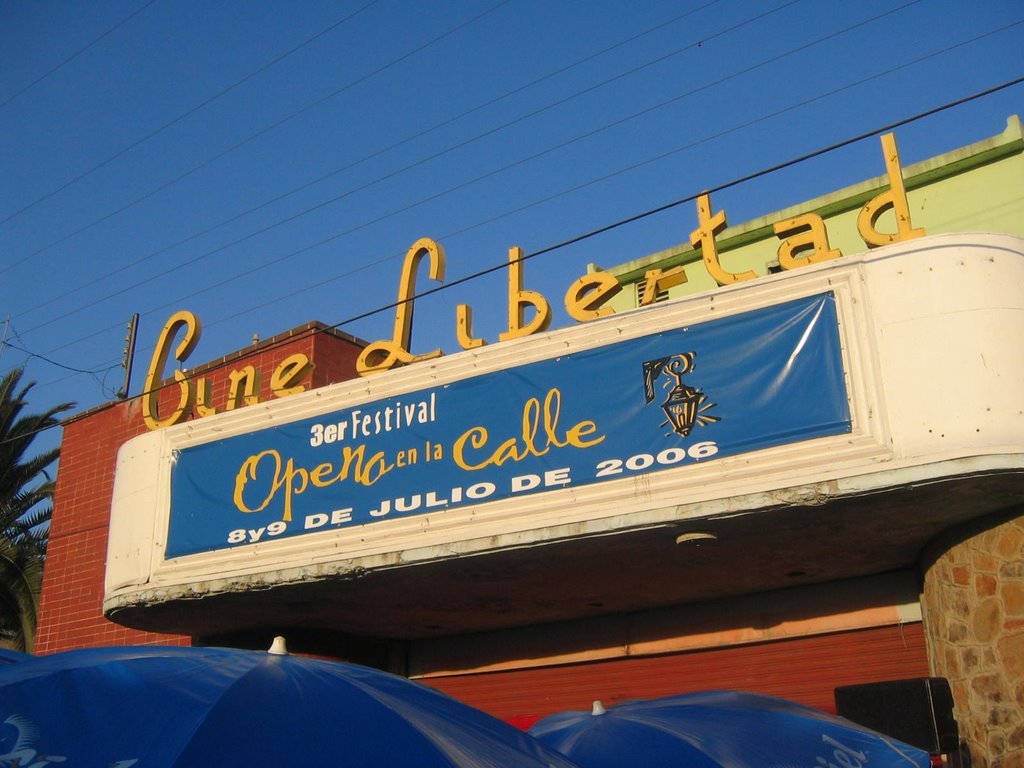
Hoy inicio el evento Opera en la Calle en la colonia Libertad aquí en Tijuana.

La colonia Libertad es la mas antigua de Tijuana pegada al Centro y a la Línea Internacional.

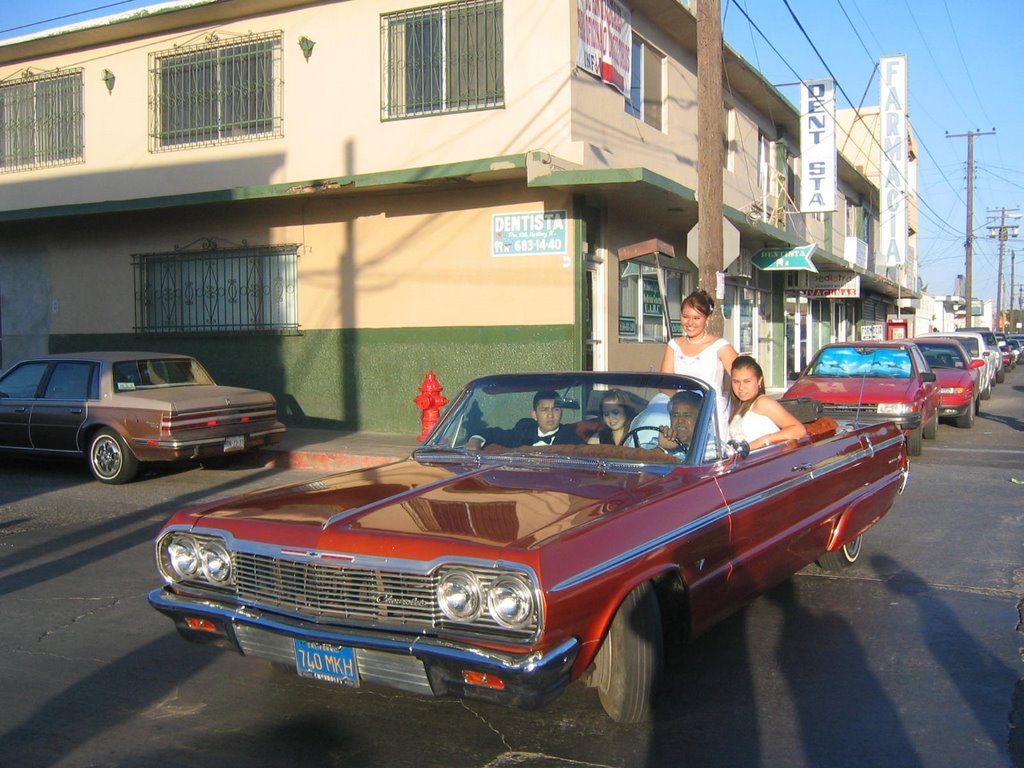
Casa de los primeros pobladores que cruzaban a trabajar a san diego, de muchos personajes del deporte como también de la cultura y música de Tijuana. La “Liber” también fue conocida por sus cholos, pachuchos, homis etc.

La calle quinta donde se ubica el viejo cine Libertad se cierra al trafico vehicular y se instalan una cantidad de puestos de comida, vino, artesanías y un gran escenarios para el espectáculo que no para desde las 10 am a 10 pm. No soy un gran conocedor de Opera, pero el evento me confirma que el espacio publico siempre se enriquece cuando le damos lugar a la ambigüedad –asombra la complejidad y relaciones de “eventos” a varias escalas que se presentan. La calle quinta es cualquier calle en Tijuana – Opera en la calle es un swap meet cultural – y como todo tianguis usa y se instala de forma parasitica en la infraestructura urbana. La ciudad en este caso por su forma urbana promueve las relaciones sociales – imposible que ocurriese en las nuevas comunidades bardadas y seriadas se los últimos 15 años.

Enhorabuena Opera en la Calle y la Liber incluyendo sus pachuchos y lowriders.

Hybridity revisited

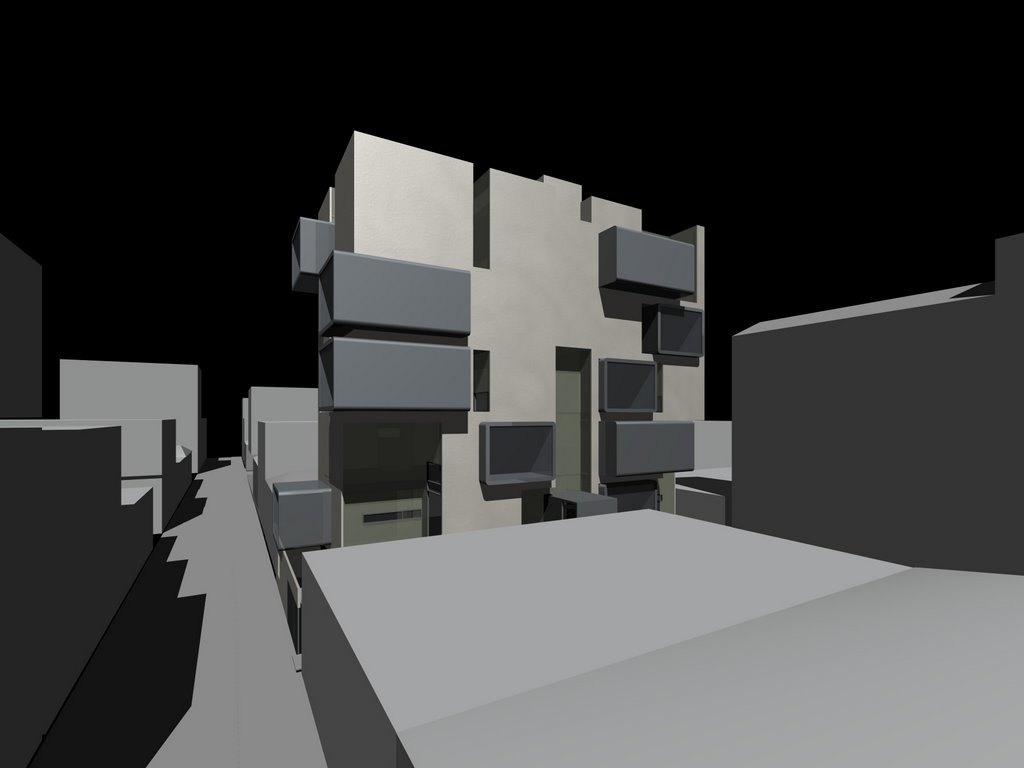
Mandelbrot – Tiuana – 2001

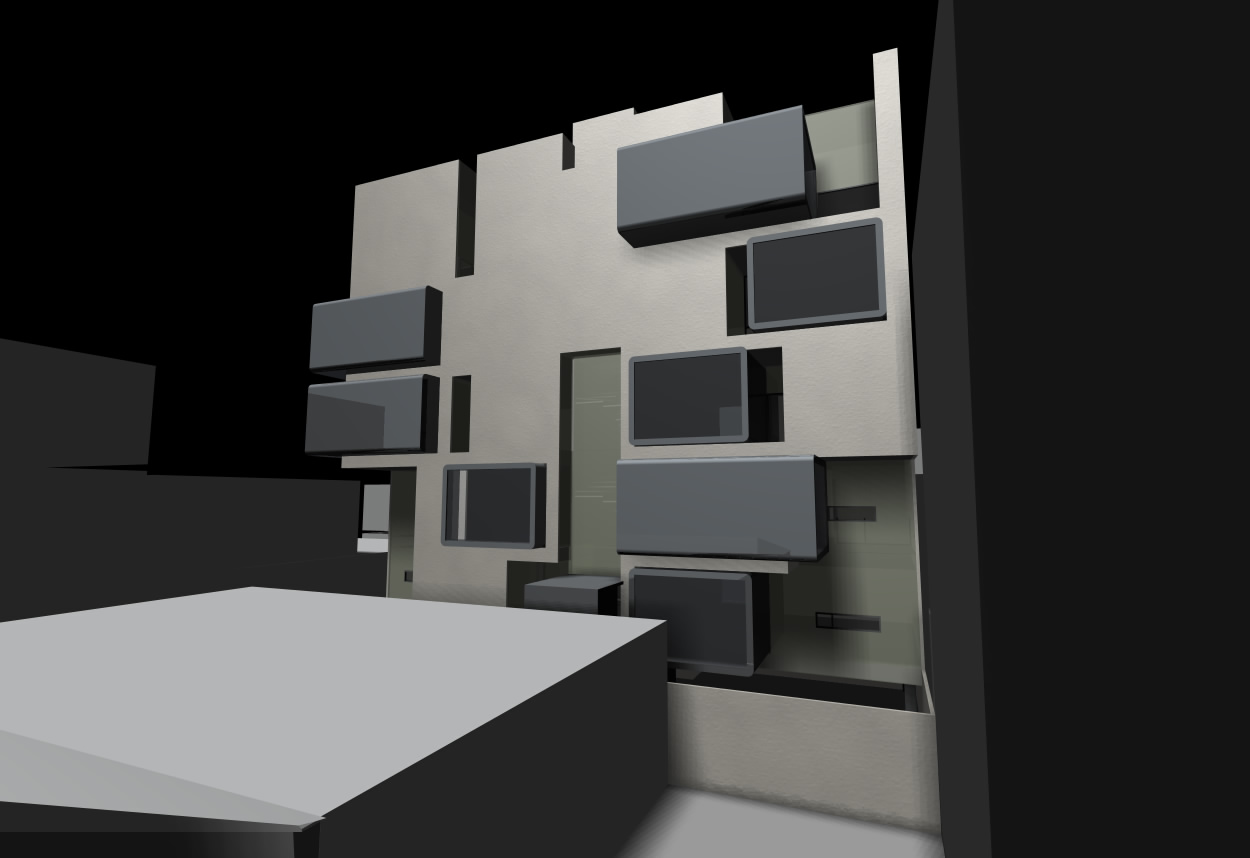
The Mandelbrot building integrates to distinct yet instrumental modes of building practices within the city. A traditional structural steel frame is merged with systematic production methods commonly found in the manufacturing plants (maquiladoras), encouraging a hybrid technique that performs to optimize space and labor through simultaneous fabrication on and off site.


Hybridity revisited

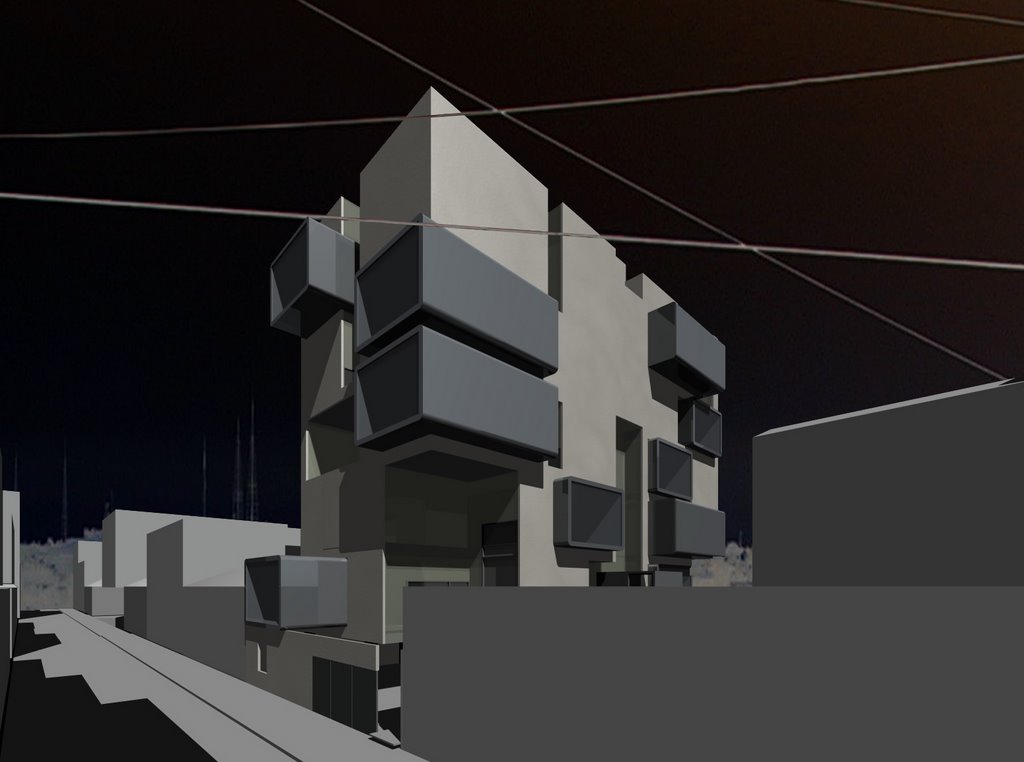
Mandelbrot – Tiuana – 2001

The Mandelbrot building integrates to distinct yet instrumental modes of building practices within the city. A traditional structural steel frame is merged with systematic production methods commonly found in the manufacturing plants (maquiladoras), encouraging a hybrid technique that performs to optimize space and labor through simultaneous fabrication on and off site.


Buildings are historically neoclassical, modernist, post modern etc, yet architectonically they are NOW.

The intention of conservationist is to freeze a building to a form it never had, because we think that searching for the origin gives a sense of clarity, e.g. searching for the meaning of a word by going back to its origin, consequently in a Hegelian manner some would say the essence of architecture is going back to the hut, therefore architecture is dwelling.

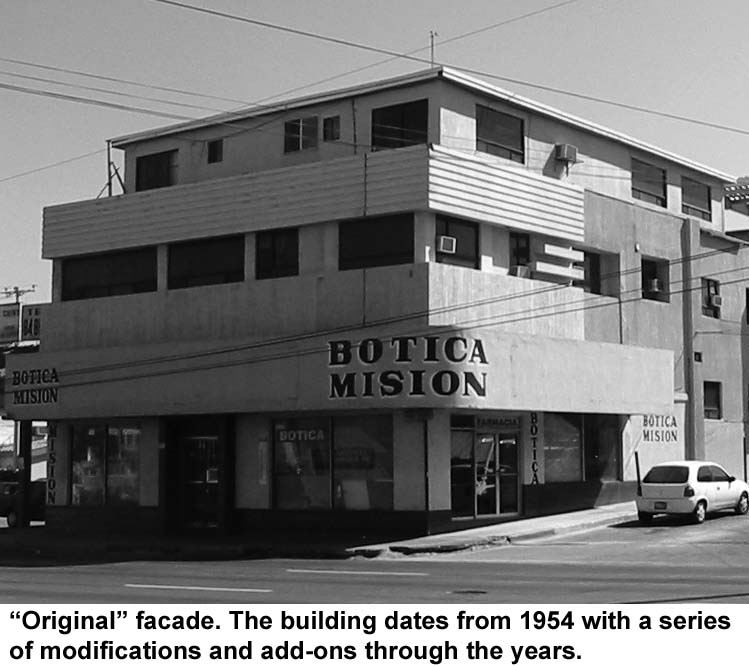
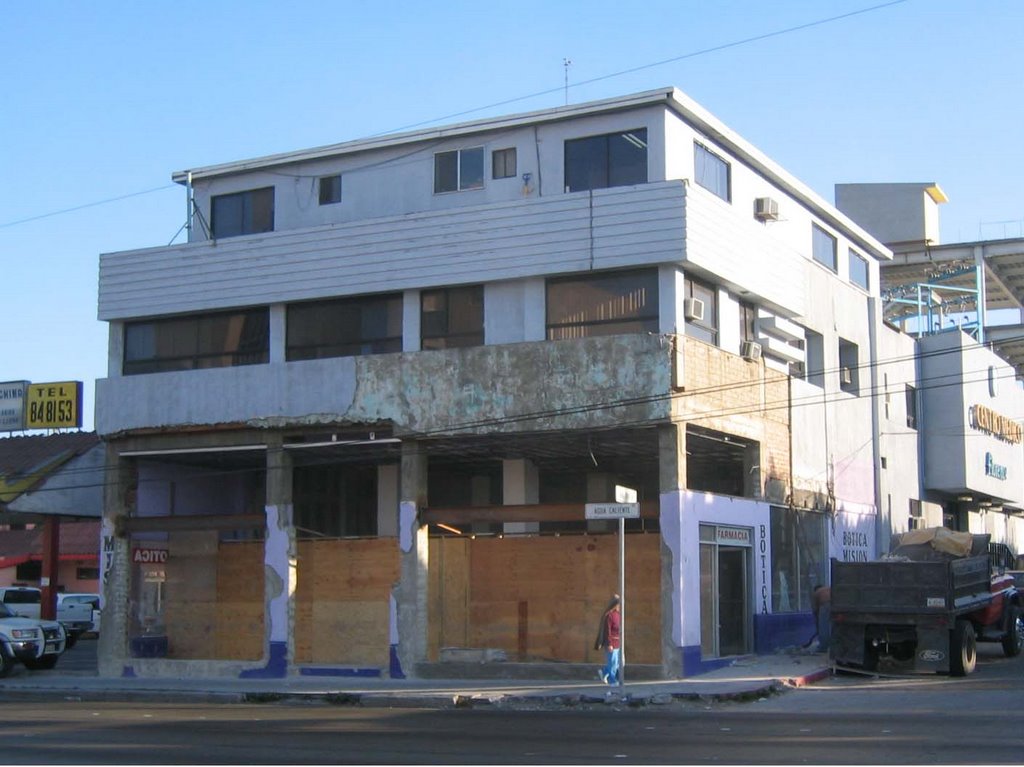
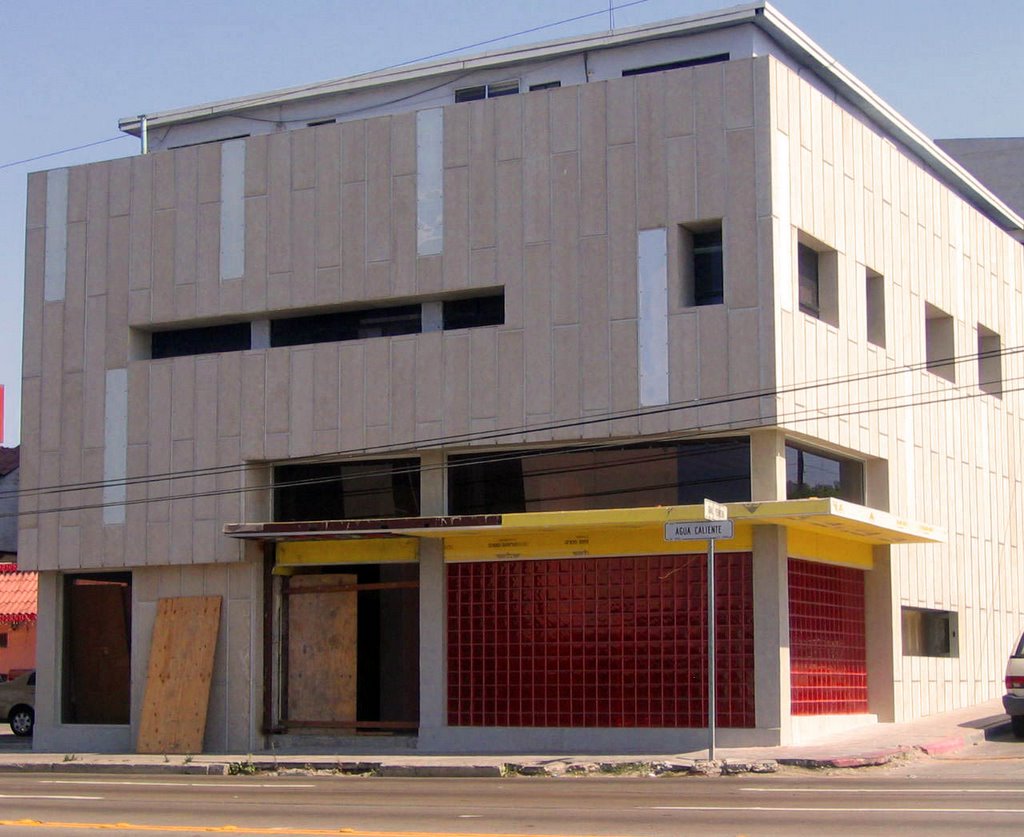
The project for the Florence Medical Center is not a restoration – the building has good karma – it is a reincarnation. The building was strip of its many appendages in order to shed a new skin. A façade that reflects it’s inside function and maintains an urban presence – street relationship.

Florence is a project that deals with history as process rather than an image.

The pattern of the facade acts as a skin that reads the programmatic activities of the building’s interior

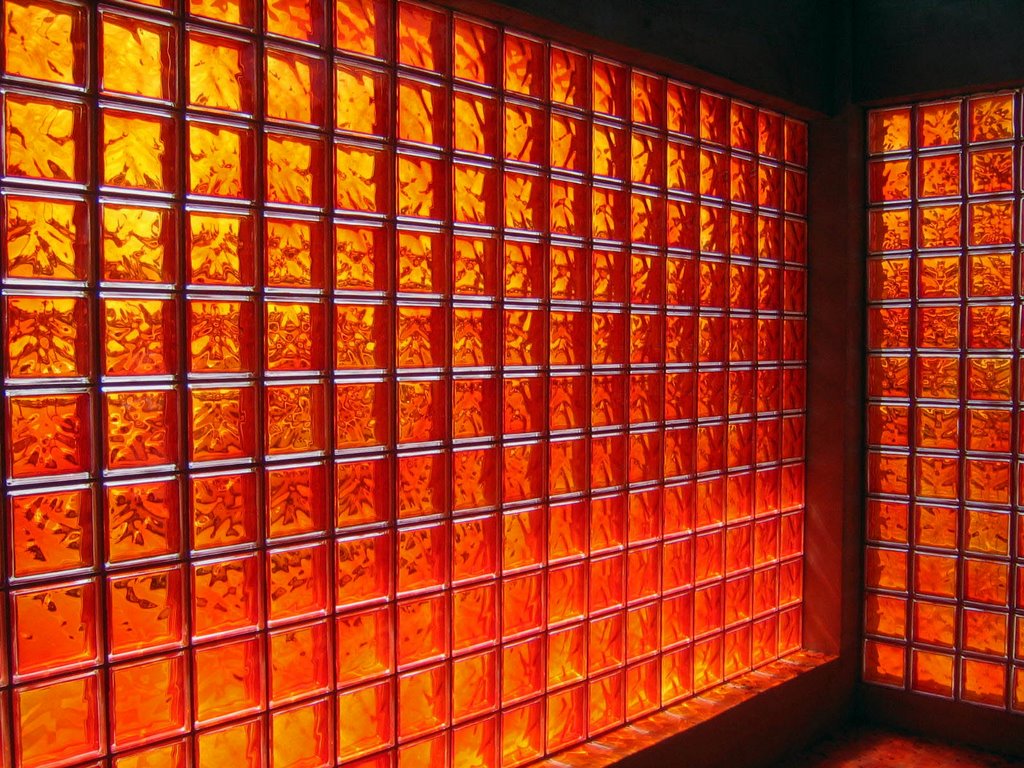
Disclaimer: the red glass block in the corner has a symbolic function. Florence used to be owned by Dr, Aubanel, patriarch of the same family that decided to hire Thom Mayne and Michael Rotondi to build Hospital del Prado a building that has a green glass façade as its main element. The red block is a small tribute.


Buildings are historically neoclassical, modernist, post modern etc, yet architectonically they are NOW.

The intention of conservationist is to freeze a building to a form it never had, because we think that searching for the origin gives a sense of clarity, e.g. searching for the meaning of a word by going back to its origin, consequently in a Hegelian manner some would say the essence of architecture is going back to the hut, therefore architecture is dwelling.

The project for the Florence Medical Center is not a restoration – the building has good karma – it is a reincarnation. The building was strip of its many appendages in order to shed a new skin. A façade that reflects it’s inside function and maintains an urban presence – street relationship.

Florence is a project that deals with history as process rather than an image.

The pattern of the facade acts as a skin that reads the programmatic activities of the building’s interior

Disclaimer: the red glass block in the corner has a symbolic function. Florence used to be owned by Dr, Aubanel, patriarch of the same family that decided to hire Thom Mayne and Michael Rotondi to build Hospital del Prado a building that has a green glass façade as its main element. The red block is a small tribute.


Davis and Monsivais – Live at the Centro Cultural Tijuana.

Last Thursday in El Centro Cultural Tijuana, Mike Davis and Carlos Monsivais conversed on the issues and situation of the border. I must say that I have enjoyed Davis books and consider his work essential as it pertains to urban studies and distopic conditions of the post-urban. In regards to Monsivais I have had a sincere respect for his work, yet I have my doubts on his analysis of Tijuana. It is apparent to me that for Monsivais Tijuana always has a folkloric element to it that is categorized more and more by a 1970’s centralized view of Tijuana, of not being truly Mexican – the same ideology that brought about the construction of the Tijuana version of Paseo Reforma in Mexico City – Paseo de Los Heroes. Interestingly enough it is during the same time that Monsivais recalls participating in a rally with Ruben Vizcaino and a group of prostitutes on Avenida Revoluvion against the bad rep of Tijuana – and the construction of Zona Rio. In his analysis or recollection this is the precise moment in time (it was his first visit to Tijuana) when a cultural awakening occurs in the city which has influenced the present literary and artistic production. I suspect that this view is a common one due to the Medias portrayal of the city. Being born in Tijuana and from a family that extends to 5 generations, I can assure you that there was cultural production before the 70’s. I suspect also that the artistic flourishing of culture now has to do more with the dilapidation of our urban culture, therefore the production deals with the embellishing of chaos and disorder.

Its it imperative to see how during the 40’s and 50’s the city had an established urban culture – meaning that we had zones where life “in” the city went hand in hand with cultural activities, creating an urban environment envious of many cities today. Beyond donkeys and prostitutes we had; jazz, bebop, big band, jaialai, bullfights, horseracing, car racing, cinema, cabaret, and many other activities that today are obsolete or have disappeared by our own negligence, a negligence that we now represent as our contemporary cultural manifestation.

Mike presented his perspective toward the north to south invasion across the border, a concurrent theme in this blog specifically in “Tijuana or Bust”. His contrary and always Marxist attitude of resistance constructs a well formulated scenario of the “take over” of the precious Baja California landscape by greedy developers and upper class suburbanites from the US. He remarked that the hundreds of housing developments being built in the Baja coast is a suburban model that brings theme park iconography and costs so exuberant ( compared to what Mexicans can afford ) that these gated communities will be populated by “gringos” and cleaned, serviced and landscaped by Mexicans in their own land. Therefore the invasion works both ways, yet according to Davis the worker that crosses to the North does so in search of a better way of life, while the suburbanite crossing to Mexico come to impose a secluded and capsular way of life while creating environmental havoc through land scrapping. It’s unfortunate that, having one of the most beautiful and diverse ecosystems in the world, we as architects, planners and developers of this country participate in its destruction. I agree with Davis, yet there must be a method of planning and development of the coast where tourist and citizens can enjoy the geography for generations to come.

Davis and Monsivais – Live at the Centro Cultural Tijuana.

Last Thursday in El Centro Cultural Tijuana, Mike Davis and Carlos Monsivais conversed on the issues and situation of the border. I must say that I have enjoyed Davis books and consider his work essential as it pertains to urban studies and distopic conditions of the post-urban. In regards to Monsivais I have had a sincere respect for his work, yet I have my doubts on his analysis of Tijuana. It is apparent to me that for Monsivais Tijuana always has a folkloric element to it that is categorized more and more by a 1970’s centralized view of Tijuana, of not being truly Mexican – the same ideology that brought about the construction of the Tijuana version of Paseo Reforma in Mexico City – Paseo de Los Heroes. Interestingly enough it is during the same time that Monsivais recalls participating in a rally with Ruben Vizcaino and a group of prostitutes on Avenida Revoluvion against the bad rep of Tijuana – and the construction of Zona Rio. In his analysis or recollection this is the precise moment in time (it was his first visit to Tijuana) when a cultural awakening occurs in the city which has influenced the present literary and artistic production. I suspect that this view is a common one due to the Medias portrayal of the city. Being born in Tijuana and from a family that extends to 5 generations, I can assure you that there was cultural production before the 70’s. I suspect also that the artistic flourishing of culture now has to do more with the dilapidation of our urban culture, therefore the production deals with the embellishing of chaos and disorder.

Its it imperative to see how during the 40’s and 50’s the city had an established urban culture – meaning that we had zones where life “in” the city went hand in hand with cultural activities, creating an urban environment envious of many cities today. Beyond donkeys and prostitutes we had; jazz, bebop, big band, jaialai, bullfights, horseracing, car racing, cinema, cabaret, and many other activities that today are obsolete or have disappeared by our own negligence, a negligence that we now represent as our contemporary cultural manifestation.

Mike presented his perspective toward the north to south invasion across the border, a concurrent theme in this blog specifically in “Tijuana or Bust”. His contrary and always Marxist attitude of resistance constructs a well formulated scenario of the “take over” of the precious Baja California landscape by greedy developers and upper class suburbanites from the US. He remarked that the hundreds of housing developments being built in the Baja coast is a suburban model that brings theme park iconography and costs so exuberant ( compared to what Mexicans can afford ) that these gated communities will be populated by “gringos” and cleaned, serviced and landscaped by Mexicans in their own land. Therefore the invasion works both ways, yet according to Davis the worker that crosses to the North does so in search of a better way of life, while the suburbanite crossing to Mexico come to impose a secluded and capsular way of life while creating environmental havoc through land scrapping. It’s unfortunate that, having one of the most beautiful and diverse ecosystems in the world, we as architects, planners and developers of this country participate in its destruction. I agree with Davis, yet there must be a method of planning and development of the coast where tourist and citizens can enjoy the geography for generations to come.

Reseña de “Aqui es Tijuana”/”Here is Tijuana” por Michael Bell

Para el Architects Newspaper de NY.


Every—where All at Once

by Michael Bell

A 2002 exhibition organized by the Museum of Modern Art titled “Life of the City” included in its three parts a wholly relocated version of what had been an instantly organized and auto curated exhibition “Here is New York.” Mounted first at a SoHo storefront in the days immediately following 9/11—Here is New York borrowed its title of the E.B. White essay of the same name. White’s essay—or more precisely, the title of White’s essay has levitated over Manhattan‘s literary world since it was published in 1949. It is the perpetual present tense of White’s title—its attempt to inhabit the moment, a flash of experience that was commensurate with the isolation and simultaneous crush of the Manhattan life that was revised. At MoMA, just months after 9-11, the title was re-applied to capture the instant change that was life in New York City at 9-11. A real time museum emerged—the MoMA’s modernity re-emerged. But it was the emergence of a state of crisis set within an exhibition that startled: yet at MoMA it was framed in the context of the larger exhibition—“Life of the City.” The most difficult image I recall was a picture of a television monitor with the text “New York City Declares State of Emergency.”

Here is Tijuana is presenting another form of a perpetual present tense emergency—one we have known for a far longer period of time. But Tijuana is also presented as a wide breadth of future potentials. In the genre of books that have embarked on a urban reconnaissance mission, “The Harvard Guide to Shopping,” “Ladders,” “City of Quartz,” “The Contemporary City” — all prodded at a public that was aware of crisis, but set in a somber lull: not unaware of disaster, but unable to harness the indignation or overt fear in the face of what counted as outright predation. After 9-11 New York’s emotions were cut wide open—and a television declaring directly “State of Emergency” invoked a kind of stilled but total pandemic; and over conscious of knowledge of a present so changed in an instant that it must be understood as a perpetual flash. Here is Tijuana is such a present— after emerging for the last 35 years Tijuana now IS—it is still the border zone, it is still the doppelganger of poverty that shows the inequity of the border at San Diego—but it also now a teaming and centerless milieu that expands east, south as much as pressing north; it is seamlessly wealthy and poor in endless gradients.

Tijuana is a locked entity—an impasse—as much a mathematically coded living and changing zone. Here is Tijuana presents a place and a condition. It’s emergent as well as here and oddly like New York we have always known it well but been unable to really see it. Tijuana is demanding to be understood but somehow opaque.

Nearly 20 years after the publication of Zone Books “The Contemporary City” and well after Mike’s Davis’ work on the Los Angeles and more recently on the global poor and slums, Here is Tijuana has deep footings—but it also must be read with an eye to the future. It’s latent question is how do we constitute the depiction of social emergencies today; how do we see them, respond to them; and indeed what is the state of recourse for those who live under crisis conditions when the flash point that would allow change is also perpetually out of reach. Here is Tijuana’s montage offers a deep sense of joy—its obvious the authors love the city, and are not demonstrating social need as much human potential, but in the light of the book’s historical footings we must ask what becomes of the metropolis that was always luring—even predatory. Something far more dangerous than New York is being depicted here— a metropolis that lures people to the border but is not designed to allow access (to the United States) becomes something internally self and re-generative; returning to itself the energies it spent on exit. Tijuana is of course everywhere: but its harder to see this without the overt border condition of San Diego and Tijuana—at the border the stilled zones of internal machinations lie counter to the heady streaming of monies that so easily characterizes the global city of the wider press—but this stillness is everywhere. It IS very much the new metropolitan life.

Text by: Michael Bell

Michael Bell

Associate Professor of Architecture

Director Core Design Studios

Coordinator Housing Studios

Columbia University, GSAPP

mjb92@columbia.edu